First, check what is ready to use
Separate ingredients that are ready-cooked from those that need preparation. Tinned beans and dried beans are not interchangeable in a quick dinner. Check packet instructions, quantities and any storage directions before choosing a recipe. An ingredient list that says “cooked rice” also assumes the rice is already cooked safely, or that you will allow time to make it.
Take a quick look in the freezer as well as the cupboard. Frozen peas or spinach can be useful in cooked dishes, but follow their cooking instructions. Write down three or four usable ingredients; you do not need a complete kitchen inventory to make tonight’s decision.
1. A tomato pasta with a useful extra
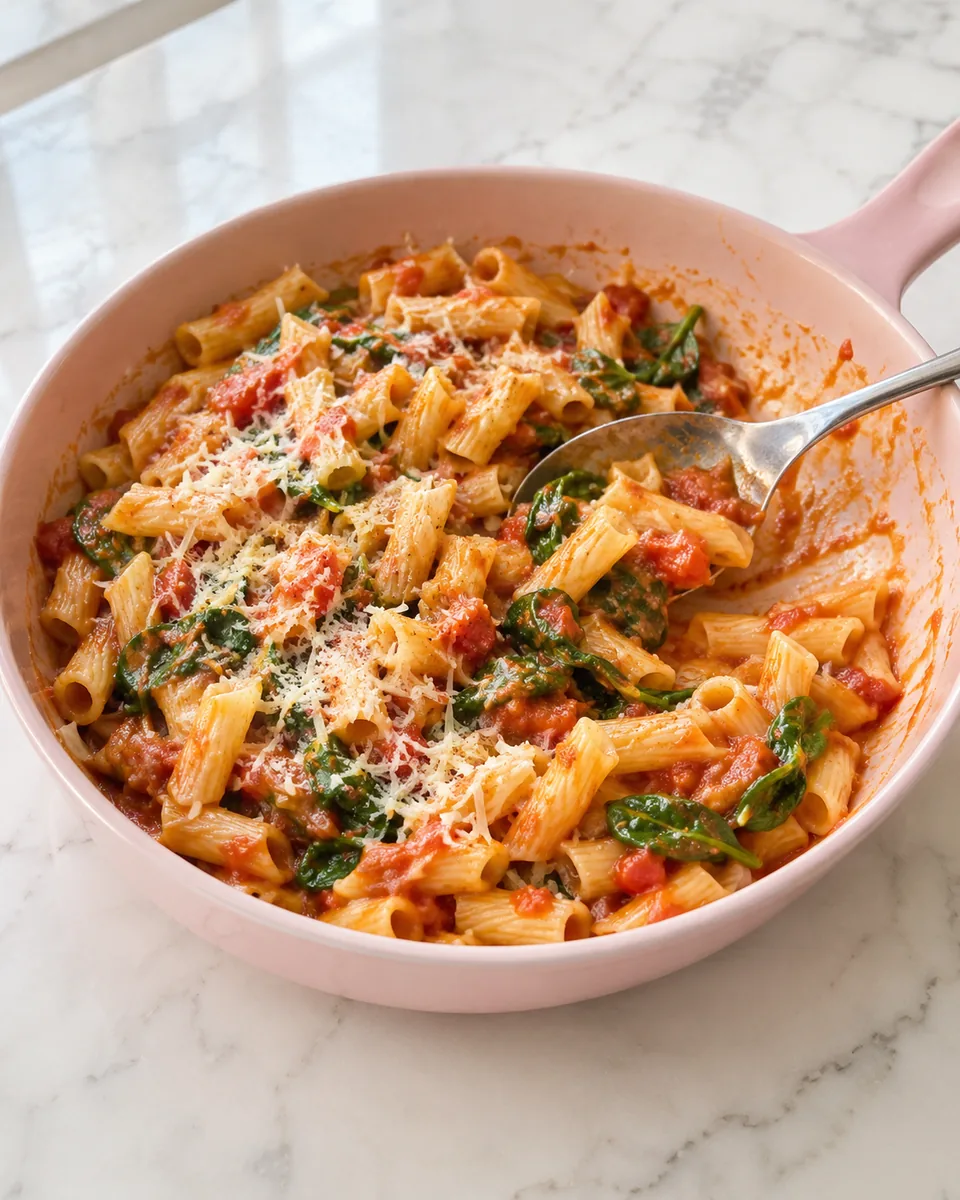
Pasta and tinned tomatoes give you an obvious starting point. Add a suitable vegetable, beans or another ingredient you enjoy, and choose a method designed for the ingredients you have. Our one-pot tomato spinach pasta is one option when the recipe’s pasta shape and liquid quantities fit your cupboard.
A one-pot method is less forgiving of large changes to pasta or liquid than cooking pasta separately. If you are adapting heavily, cook the pasta according to its packet and make a separate sauce. Keep some cooking water to adjust the sauce, adding it gradually rather than all at once.
2. A bean chili or a bowl
Ready-cooked beans, tinned tomatoes and spices can become black bean chili. Choose the recipe first, then see which optional toppings you already have. A meal does not need sour cream, avocado, cheese and fresh herbs all at once.
If you would rather assemble a bowl, use the black bean burrito bowl recipe as a guide and cook the rice fresh. Beans differ in texture, so a substitution may change the finished bowl even if it works well. Use the cooked version called for; do not add dried beans directly to a recipe written for tinned beans.
3. Lentil soup, or 4. a lentil sauce
Red lentils suit a soup when you want them to soften into the liquid. Lentil vegetable soup combines them with vegetables and tomatoes. Check the packet and recipe for rinsing and cooking instructions, and allow enough liquid as the lentils absorb it.
For a different result, lentil bolognese uses lentils as part of a tomato sauce for pasta. Red, green and brown lentils behave differently; changing the variety can affect both texture and cooking time. Rather than swapping blindly, pick the recipe closest to the lentils you actually have.
These two formats are useful alternatives because one gives you a spoonable meal and the other a sauce. Bread, pasta or a simple side can be chosen from what is available, without adding several new shopping items.
5. A bean salad when you do not want a hot meal
With ready-cooked beans, a simple dressing and suitable vegetables, dinner can be assembled rather than simmered. Tuna white bean salad is a starting point if you have tinned tuna; chickpea cucumber salad gives another direction when you have cucumber and herbs.
Drain ingredients as the recipe directs and taste before adding more dressing. If you are missing the fresh ingredient that defines a particular salad, choose a different format rather than expecting an unrelated substitute to give the same result.
Keep one complete fallback in the cupboard
Once you find a combination you like, note the ingredients and keep enough for one repeat. A fallback works best as a complete meal idea, not six tins that do not obviously belong together. Replace the ingredients when you use them, and review what remains before buying more.
Use the budget grocery list guide to give those purchases a clear place in your shop. Add the dinner to a flexible slot in your weekly plan, or use the forthcoming Healthy Living Starter Pack printables when they are available. The aim is a familiar answer to “what’s for dinner?”, using ingredients that are already waiting for you.