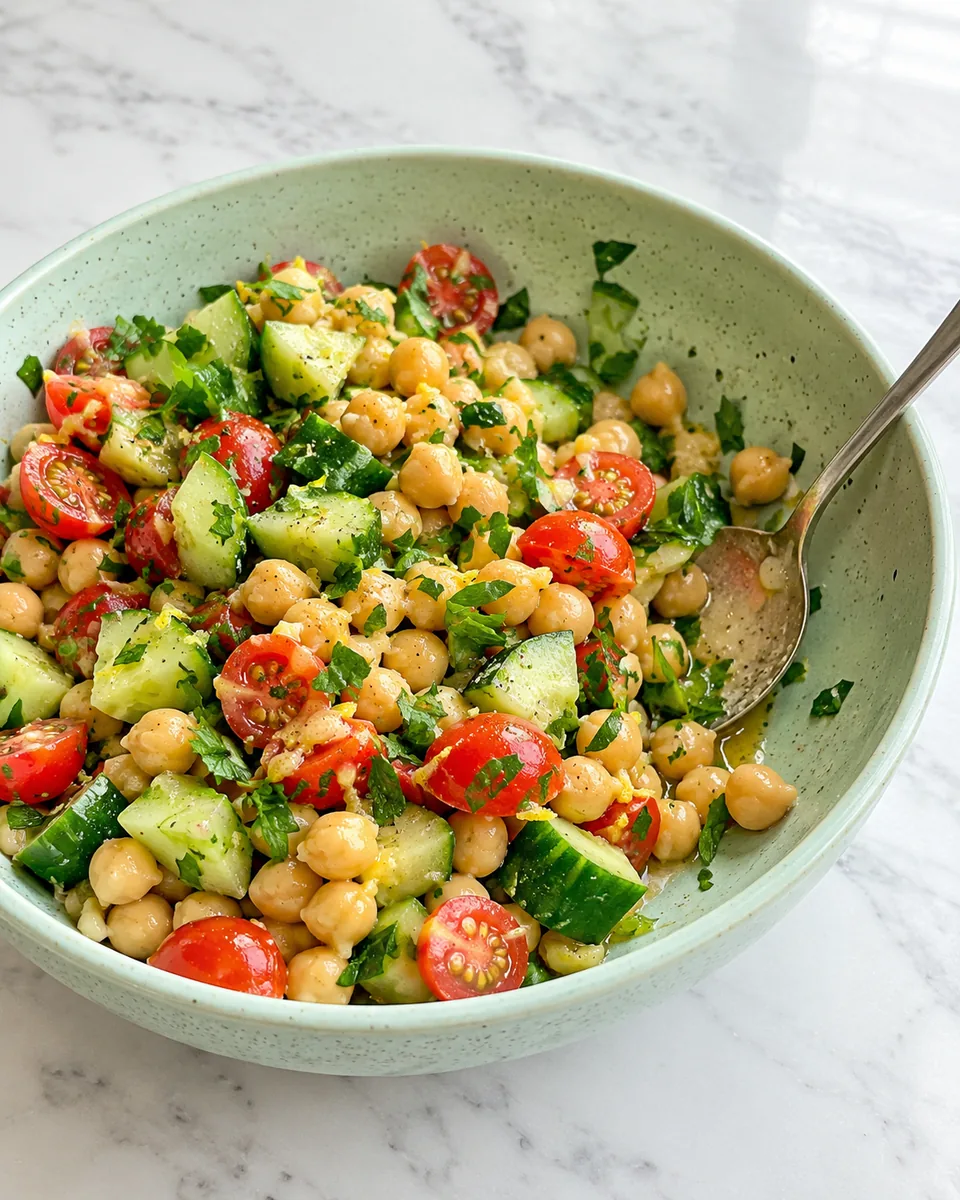
Choose the part that gives the bowl substance
Start with cooked grains, potatoes, pasta or beans, then decide how much leaf you want around them. The base does not need to fill the entire bowl. It simply gives the other ingredients something to sit with. For a lunch that travels well, a couscous or chickpea salad may be more convenient than a loosely packed pile of lettuce.
Try Mediterranean couscous salad when you want a spoonable bowl, or chickpea cucumber salad when you want more crunch. Bread on the side is another option; every component does not have to be mixed into the same container.
Add a protein ingredient you actually like
Chicken, tuna, eggs, tofu, beans and lentils offer different flavours and textures. The NHS Eatwell Guide includes beans, pulses, fish, eggs and meat among protein foods. That gives you a range of starting points; it does not mean every salad needs a particular protein target.
Choose one main ingredient before adding extras. For example, tuna white bean salad already combines tuna and beans. It does not need several additional expensive toppings to become a worthwhile lunch. If you prefer a plant-based bowl, make sure the dressing and finishing ingredients fit that choice too.
Use contrasts that make the next bite interesting
A good salad can include something crisp, something soft and something with a stronger flavour. Cucumber against chickpeas, roasted pepper against couscous, or a little feta against tomatoes gives you that contrast without an enormous ingredient list.
Cut ingredients to suit the way you will eat. Small pieces work well in a spoonable grain bowl; larger pieces can make a simple plated salad feel more generous. Avoid cutting everything into tiny identical cubes just for appearance. Leave room for textures to be recognisable.
- Crisp: cucumber, radish, shredded cabbage or toasted seeds.
- Soft: cooked beans, roasted vegetables or avocado.
- Bright: lemon, a little pickled onion or fresh herbs.
- Rich: olive oil, yogurt dressing, cheese or tahini.
Dress the base, then decide what the leaves need
For a grain or bean salad, mix a little dressing through the substantial ingredients first. Taste a bite that includes more than one component. If it seems flat, consider whether it needs acidity, seasoning or simply more dressing rather than adding every condiment at once.
Keep the dressing proportionate. A creamy dressing can be loosened a little so it coats the ingredients instead of collecting at the bottom. Follow a specific recipe when starting out; note what you changed so the combination is easy to repeat. With strongly flavoured ingredients such as feta or olives, taste before adding more salt.
Pack it for the lunch you will actually eat
If you are taking salad to work, separate tender leaves, dressing and crunchy toppings until lunchtime. Use a leakproof pot for the dressing and leave enough room to mix the salad without spilling it. Put bread or crackers in another container so they keep their intended texture.
Follow storage instructions for each ingredient and keep prepared salad chilled. A pretty jar does not make it shelf-stable. For a larger preparation session, our guide to varied meal prep explains how to plan smaller batches and handle cooked components safely.
Finally, notice how the lunch works for you. If it consistently leaves you wanting another meal soon after, try a larger portion or add a side you enjoy. If it feels heavy and muddled, simplify the toppings. Save the combinations you like, and put them into your weekly plan. Our forthcoming Healthy Living Starter Pack will include printable planners for keeping those reliable lunches in rotation.