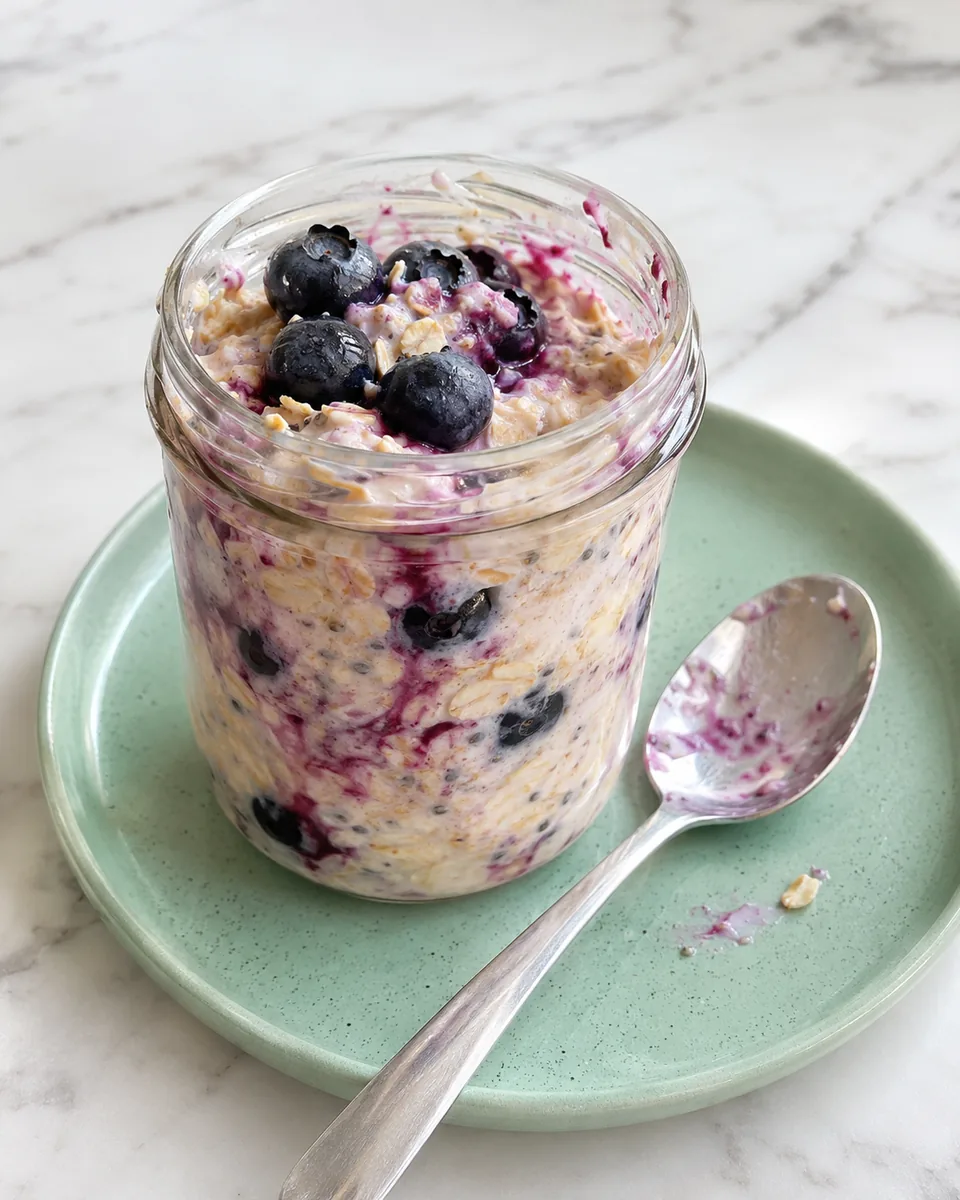
Start with ordinary rolled oats
Rolled oats are a convenient starting point because they soften without disappearing completely. Very finely cut or instant oats tend to give a smoother, softer result, while steel-cut oats are not a like-for-like substitute in a recipe written for rolled oats. Check the recipe and the packet rather than swapping every oat product by volume.
Use a clean jar or covered bowl with room for stirring. A jar is convenient for travelling, but it is not essential equipment. Choose a container you can comfortably eat from and clean; the narrowest, prettiest bottle is rarely the easiest option at breakfast.
Use a starting ratio, then adjust
For a simple one-serving starting point, mix 40 g rolled oats with 100 ml milk or a suitable alternative and 50 g plain yogurt. This is a texture starting point, not a fixed nutritional serving. Stir thoroughly so there are no dry pockets at the bottom, cover and refrigerate overnight.
In the morning, stir again. Add a small splash of liquid if the oats are thicker than you like. If your chosen yogurt is very thick, you may need more liquid than someone using a thinner product. For a complete flavoured recipe with quantities, follow our blueberry overnight oats.
Changing the oats, yogurt and liquid all at once makes it hard to tell which adjustment helped. Change one thing on your next attempt and keep a quick note.
Know which ingredients keep absorbing liquid
Chia seeds, ground flax and extra oats change how much liquid the mixture needs. Nut butter adds a different sort of thickness. If you add all of them to a basic recipe without adjusting anything else, the result can become much denser than intended.
Begin with the amounts in the recipe. For peanut butter banana overnight oats, stir the peanut butter through evenly rather than leaving a thick lump in one corner. Add extra milk in small amounts at serving, stopping when the texture suits you. Do not assume a larger jar needs every ingredient doubled.
Add fruit and crunch at the right moment
Some fruit can be mixed in before chilling, while other toppings are more appealing just before eating. Berries can release colour and juice into the oats, which may be exactly what you want. Banana slices look fresher when added in the morning. Granola and toasted seeds keep more crunch when stored separately.
Frozen fruit can change both the colour and thickness as it thaws. Follow the product instructions, including any instruction to cook before eating; not every frozen fruit product is intended to be eaten directly after thawing. If you want predictable texture while learning the recipe, begin with fresh fruit added at serving.
- Too thick: stir in liquid a spoonful at a time.
- Too thin: use a little less liquid in the next batch; choose a thicker yogurt if preferred.
- Too bland: try cinnamon, vanilla or a little fruit before piling on toppings.
- Too sweet: reduce the sweetener next time and taste the fruit first.
Make the amount you will use
Keep overnight oats refrigerated, follow the shortest storage instruction on the ingredients and avoid preparing a week of jars by default. Making tomorrow’s breakfast is already useful. Dairy or plant-drink labels may include instructions for how long to keep the product after opening.
You can prepare dry oat portions separately if you want to reduce the evening measuring. Add the chilled ingredients when you are ready to make the next serving. For a different breakfast texture, try baked oatmeal with berries rather than forcing yourself to enjoy cold oats.
Our breakfast guide without protein powder offers other combinations. Write two favourites into your weekly routine, and use the forthcoming Healthy Living Starter Pack to keep the morning plan simple.