Start with one main ingredient
Pick one ingredient to build around rather than trying to add everything at once. A yogurt bowl, eggs on toast or beans alongside a potato breakfast each offers a different starting point. The NHS Eatwell Guide identifies eggs and pulses as protein foods and notes that milk, cheese and yogurt also provide protein.
Products differ. Compare labels if you want to know how much protein your chosen yogurt, cottage cheese or plant-based alternative provides. A recipe title does not tell you the exact nutritional content of the brands and quantities on your plate. This guide offers meal ideas rather than a universal protein target.
For a sweet breakfast, try a bowl or small pancakes
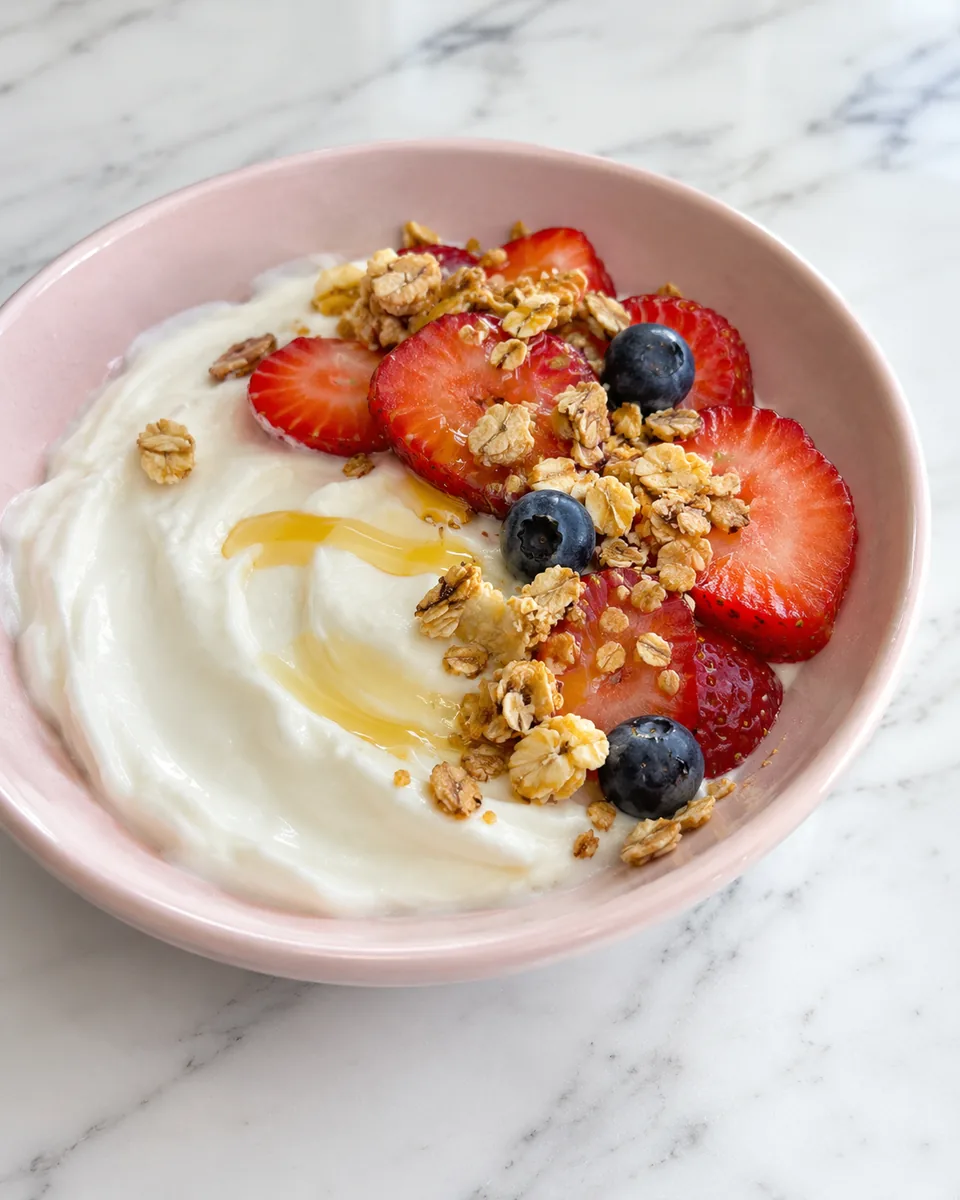
A Greek yogurt breakfast bowl is simple to assemble: start with the yogurt, then add fruit and oats or another topping you enjoy. Keep crunchy ingredients separate until eating if you prepare the bowl ahead. Choose plain yogurt if you prefer to decide how much sweetness to add yourself.
For a cooked option, cottage cheese pancakes combine cottage cheese with eggs in a small pancake batter. Make them small enough to turn comfortably, and use the recipe’s quantities instead of substituting cottage cheese directly into an unrelated pancake recipe. A different ingredient can change both thickness and cooking behaviour.
For a savoury breakfast, make the format convenient
Eggs do not have to mean a full cooked breakfast. Spinach and feta egg bites are a portioned option; breakfast sandwiches bring the components together in something easy to hold. Add fruit or vegetables in a way that suits the meal rather than treating them as decoration.
If you prefer a breakfast without eggs, consider beans on toast or beans with potatoes and cooked vegetables. Use ready-cooked beans for a quick assembly and follow their packet instructions. Keep sauce or seasoning simple while you work out which combination you want in the morning.
Use ordinary additions in oats and smoothies
Milk and yogurt can be part of an oat breakfast without changing it into a specialised supplement recipe. Our overnight oats guide explains a starting ratio and how to adjust it. The aim is a breakfast you enjoy eating, not a jar made so thick by extras that you can barely stir it.
For a smoothie, decide whether you want it as a drink alongside breakfast or as part of a larger meal. Yogurt, milk and nut butter alter the flavour and texture in different ways. Follow an existing recipe first; adding a large spoonful of every suggested ingredient can overwhelm the fruit. Check labels and allergies when choosing alternatives.
Match the preparation to your morning
If you leave home early, choose something that needs only assembly. Measure dry oats, put a bowl and spoon within reach, or decide which fruit is going into the yogurt. If you have a little time to cook, keep the pan and the ingredients easy to find. Small preparation steps can remove more friction than an ambitious batch-cooking session you rarely finish.
For any cooked breakfast you make ahead, follow its storage and reheating instructions. Keep chilled ingredients cold when travelling. Our meal-prep guide explains why a shorter preparation cycle can be more useful than assuming every breakfast should last all week.
Choose two options for the coming week: one you can assemble and one you would enjoy cooking. Put the ingredients on your list and notice which breakfast fits which day. The forthcoming Healthy Living Starter Pack will include planners to make that routine visible, without turning breakfast into another complicated project.
Keep one backup breakfast available for mornings when the original plan changes. Familiar, easy-to-assemble food still counts as a useful plan.